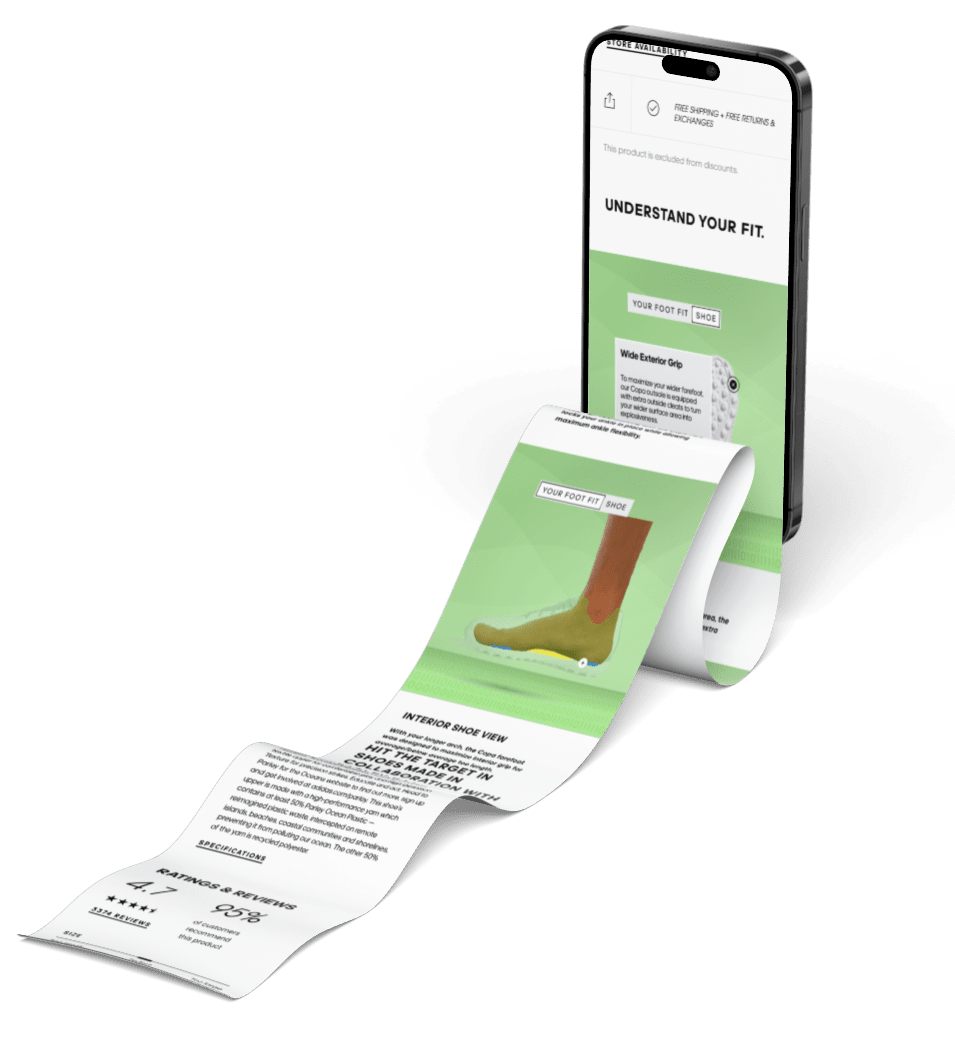
AdiFit

As a self-proclaimed sneaker head, I've experienced the frustration of purchasing from new brands. This personal pain point led to a broader question: am I the only one who faces this problem? My research confirmed it's a major issue—not just for users, but for businesses as well. Every year, companies lose millions of dollars due to the high volume of shoe returns, highlighting a critical need for a better online sizing experience.


Explore the Prototype
Role
Primary UX/UI Designer & Researcher
Tools
Figma, Photoshop, Adobe CC
Skills
Wireframing, Prototyping, User Research, Strategy & Discovery, App Design
Year
2023
Discovering Real Problems to Build Tangible Solutions

40

%

Shoes bought online typically have the highest return rates at 30% to 40%.

46

%

of users that are more likely to make online purchases for shoes if they know that it will fit.

+10

%

Average growth of US online shoe industry between 2018 and 2023

If I'm not familiar with the brand, I typically just guess my shoe size and hope for the best.

Stacy

Selection overload can be a problem, there's just too many option out there...

Hunter
From Sketches to Prototypes
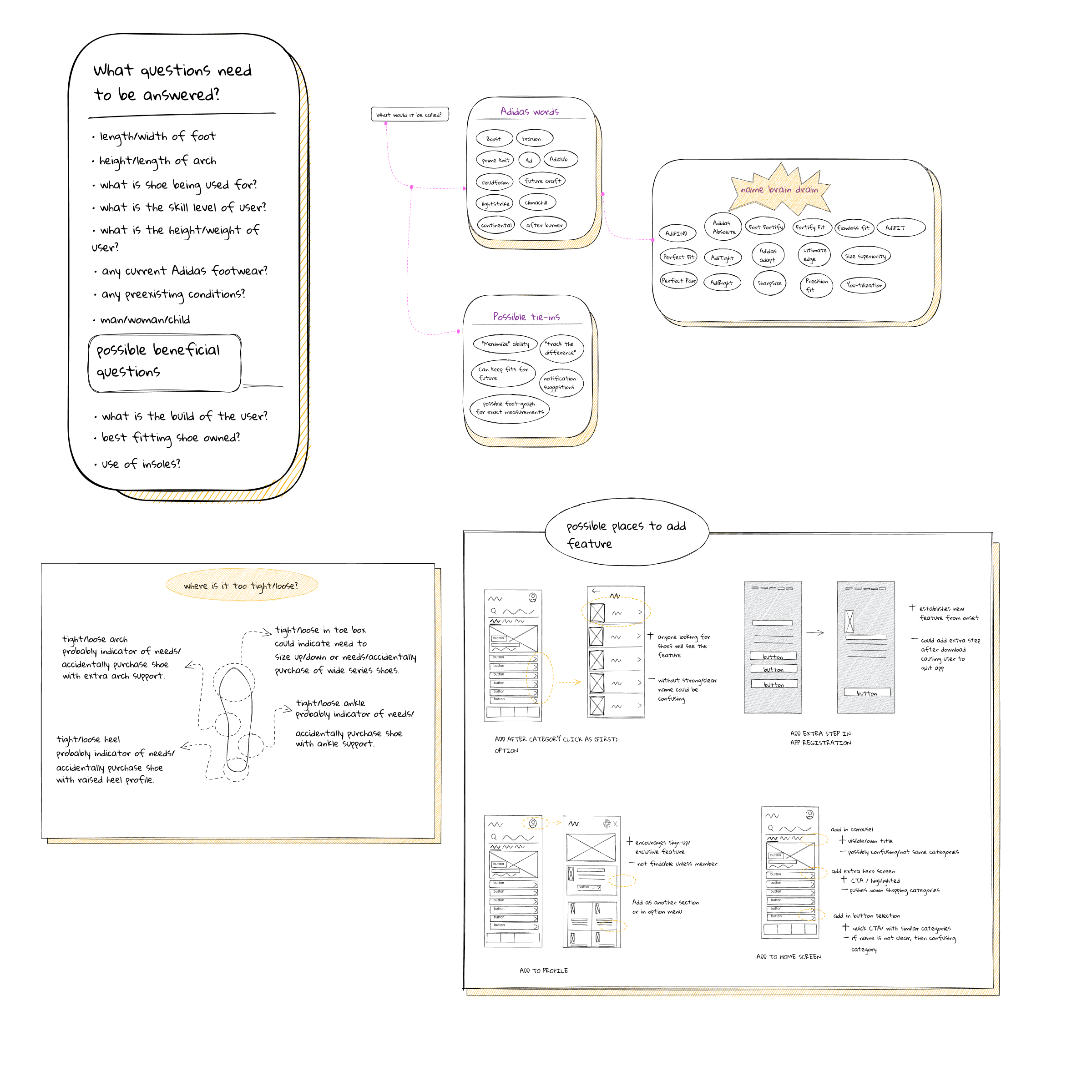
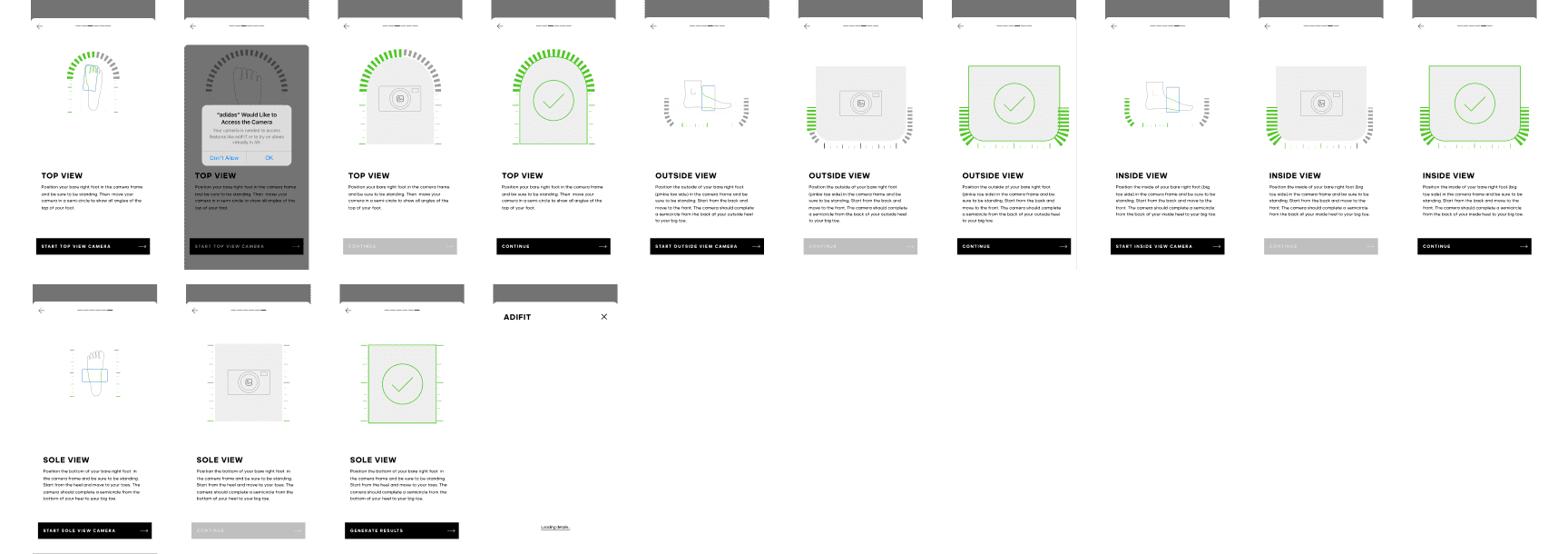
Click the pink 'Sketches' button or slide the slider right to see the 'Protototype' image. Click the pink 'After' button or slide the slider left to see the 'After' image.
Sketches
Prototype
Project Overview

Bridging the Gap from Technology to User
Objective
The primary objective was to design a solution that improves the online shoe shopping experience. This went beyond just making a transaction. The goal was to build trust and confidence in the user by creating a reliable sizing tool and providing a personalized shopping experience.
Challenge
The main challenge was to solve the problem of sizing and product selection with an innovative, tech-forward solution. This was accomplished by building trust, easing user adoption, and translating needs.
Defining the Problem

Solving the Confidence Crisis in Online Retail

Problem # 1

Sizing and fit uncertainty hinders online shoe purchases

Problem # 2

Matching shoes to specific user needs online is difficult

Empathize

Our 1st Step: Understanding the User

Surveys
25 completed
Our research confirmed a pervasive problem: a majority of participants struggled with sizing uncertainty when trying new brands or new shoe styles.

My attempted solution was a direct response to these pain points. I uncovered that a quick, in-app sizing tool would not only improve the shopping experience but also significantly increase customer loyalty. Additionally, providing clear guidance on shoe selection for specific activities would further enhance satisfaction and build trust with our users.

Give Me Convenience or Give me Death

We found that speed is a critical factor in user adoption. 84% of survey respondents said they were willing to use an in-app sizing feature, but only if it could be completed in under five minutes.

100

%

of participants expressed a high likelihood of making future purchases after a positive shopping experience.

Gender Demographics

Male
45%
Female
55%
Non-binary
5%

72

%

of survey participants struggled with sizing when trying new companies.

Age Demographics

26-35
65%
36-45
35%
<25 years
5%
Contextual Interviews
To understand how users currently navigate the Adidas site and what challenges they face, I conducted contextual interviews. By observing users as they performed a specific task—searching for an indoor soccer shoe — I was able to uncover their natural behaviors, frustrations, and thought processes, providing a deeper, more accurate understanding of the existing user journey.
4 Participants
Hunter
36, Male
Morgynn
26, Female
Stacy
38, Female
Stephen
36, Male
Key Takeaways

Sizing Uncertainty

They lacked confidence that a shoe would fit correctly.

Information Overload

They were overwhelmed by the number of choices and unable to filter options effectively.

The "Why"

They could not easily understand the specific benefits and features of a shoe to make an informed decision.
Analysis

The Perfect Fit: Insights & Discoveries
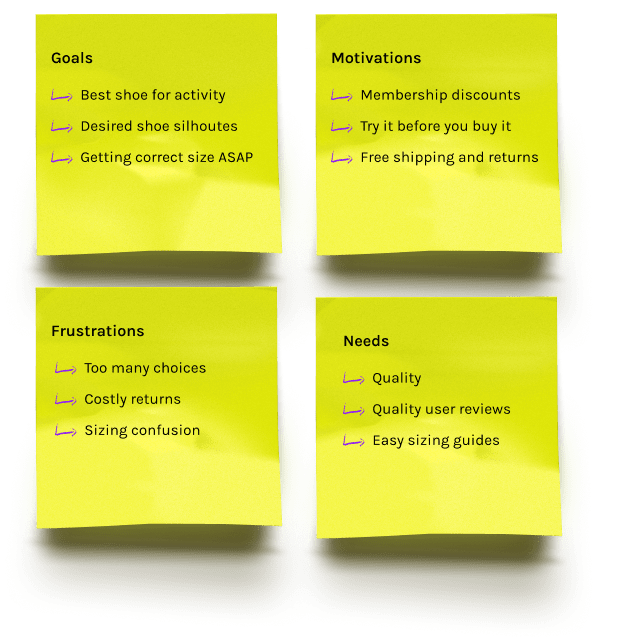
User Persona
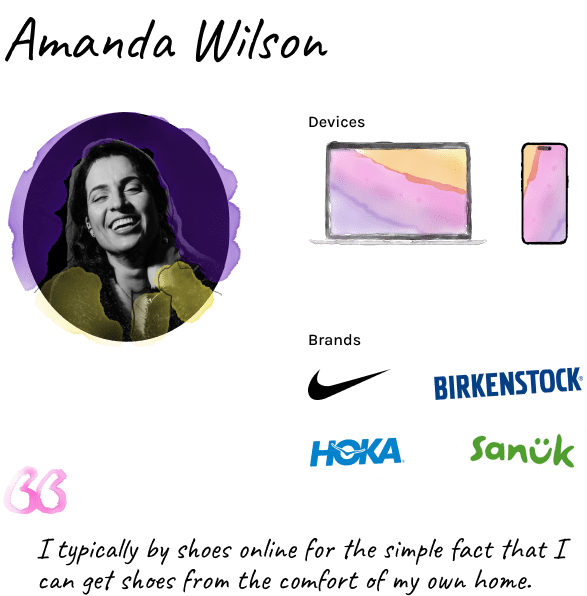
Meet Amanda. She's ready to buy a new pair of soccer shoes, but her excitement quickly turns to frustration. Since she has no experience with indoor turf, she feels lost and unsure of what to buy. Worried about choosing the wrong pair and having to go through a frustrating return process, she gives up her search entirely.
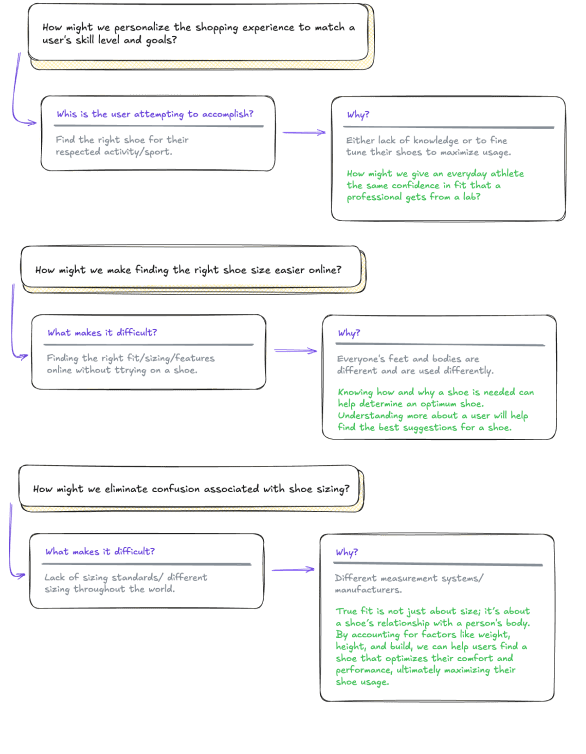
How Might We...?
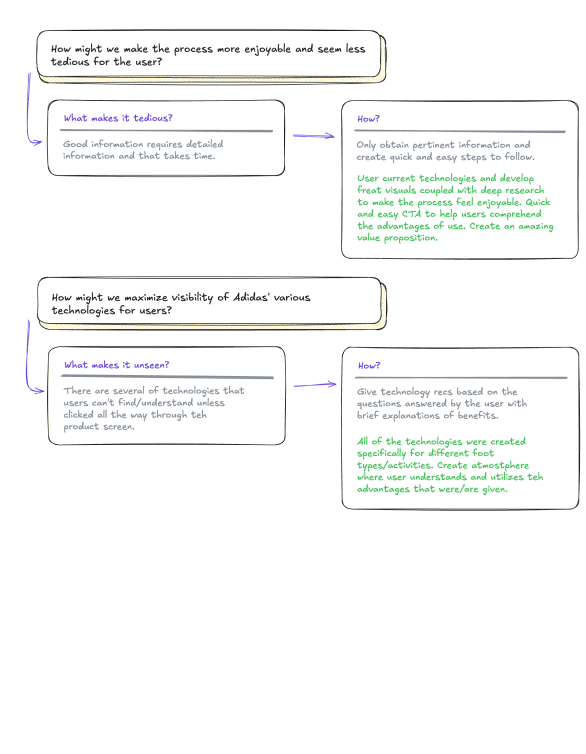
I transformed our user's pain points into actionable questions. By framing these challenges as "How Might We" statements, I shifted my focus from simply understanding the problem to actively exploring a range of creative and innovative solutions. This approach allowed me to bridge the gap between our research findings and the design process, ensuring our solutions were directly tied to real user needs.
User Journey
To design the perfect solution for Amanda, we first have to walk a mile in her shoes. This user journey map outlines her current process, from her initial excitement to her final frustration. It's the guide for identifying the key moments where we can build a better, more confident user experience.
Ideate

The Blueprint for Better Strides

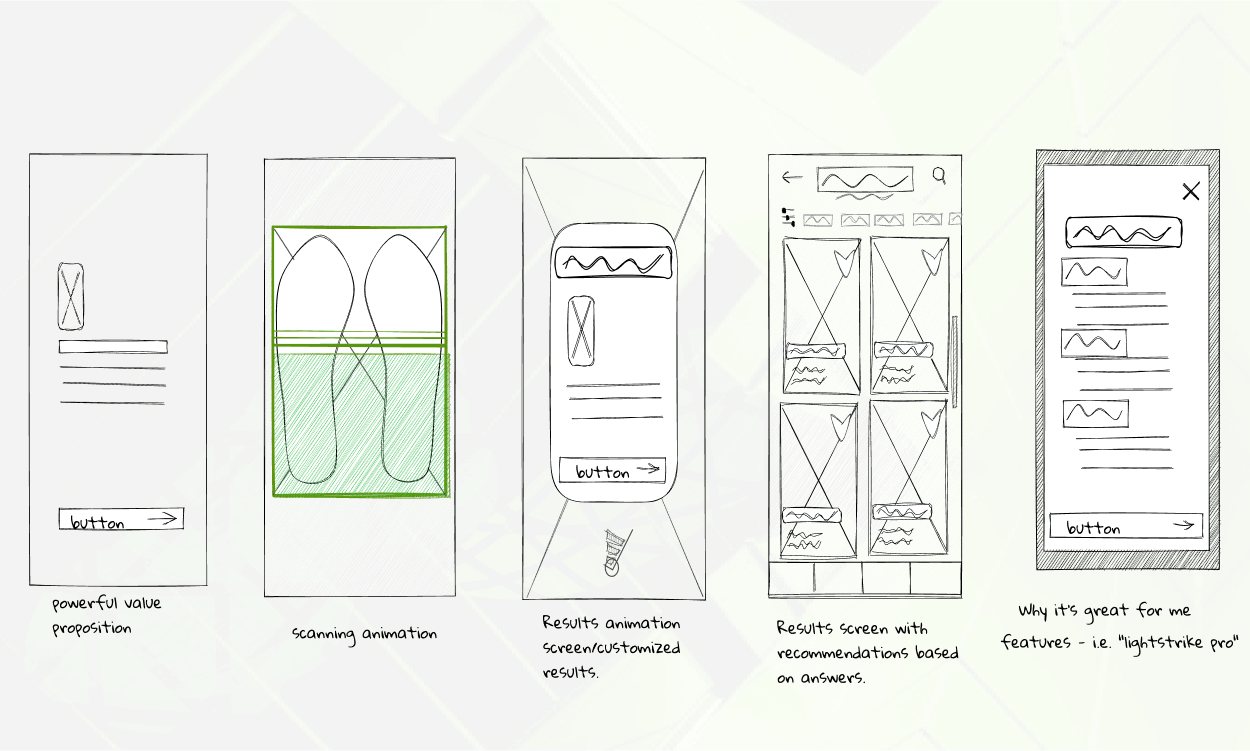
Sketches
Now that we understand Amanda’s journey and have our "How Might We" statement as our guide, it's time to explore some possible solutions. These sketches represent a few of my initial ideas for how we can help The Indecisive Athlete find the right fit with confidence. Each concept tackles a different part of her problem, from visualizing the shoe on her foot to providing expert recommendations.
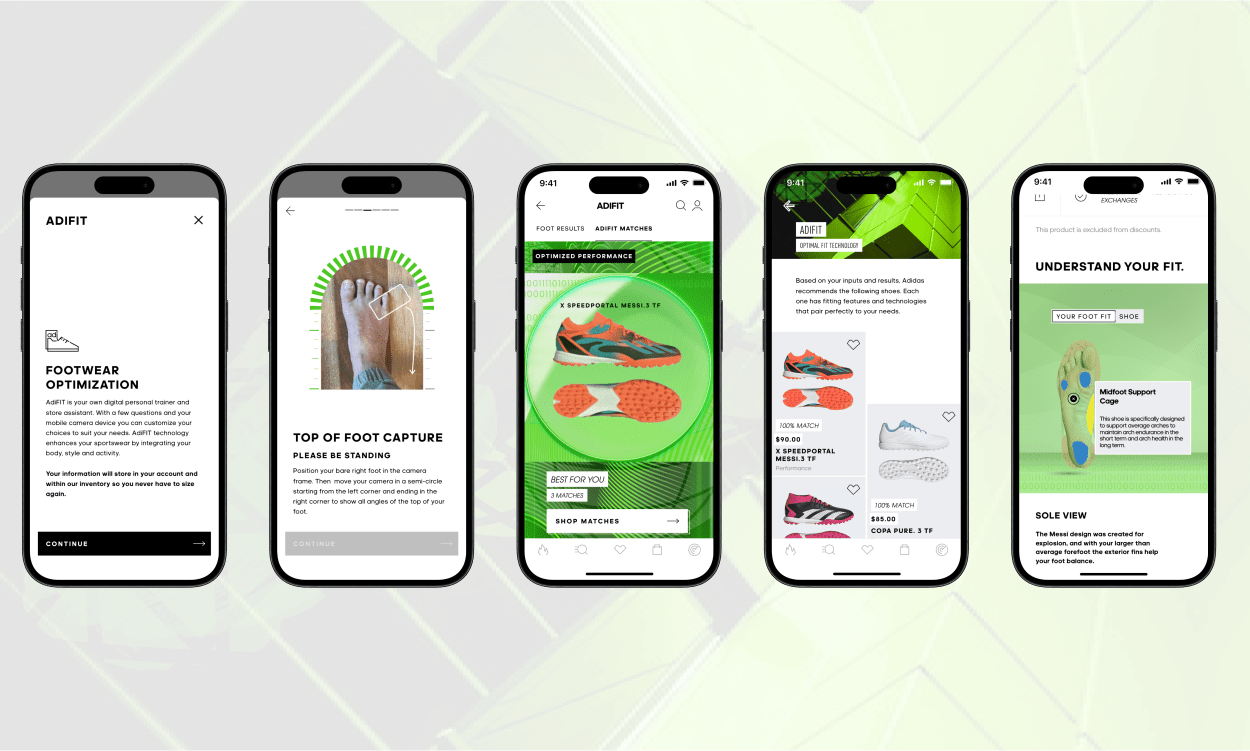
Wireframing
Now that we've explored some initial concepts, these wireframes translate those ideas into a tangible design. They illustrate the key screens and user flow for Amanda, showing how she'll find the perfect pair of shoes with confidence and ease.
Solution

Adi-Fit

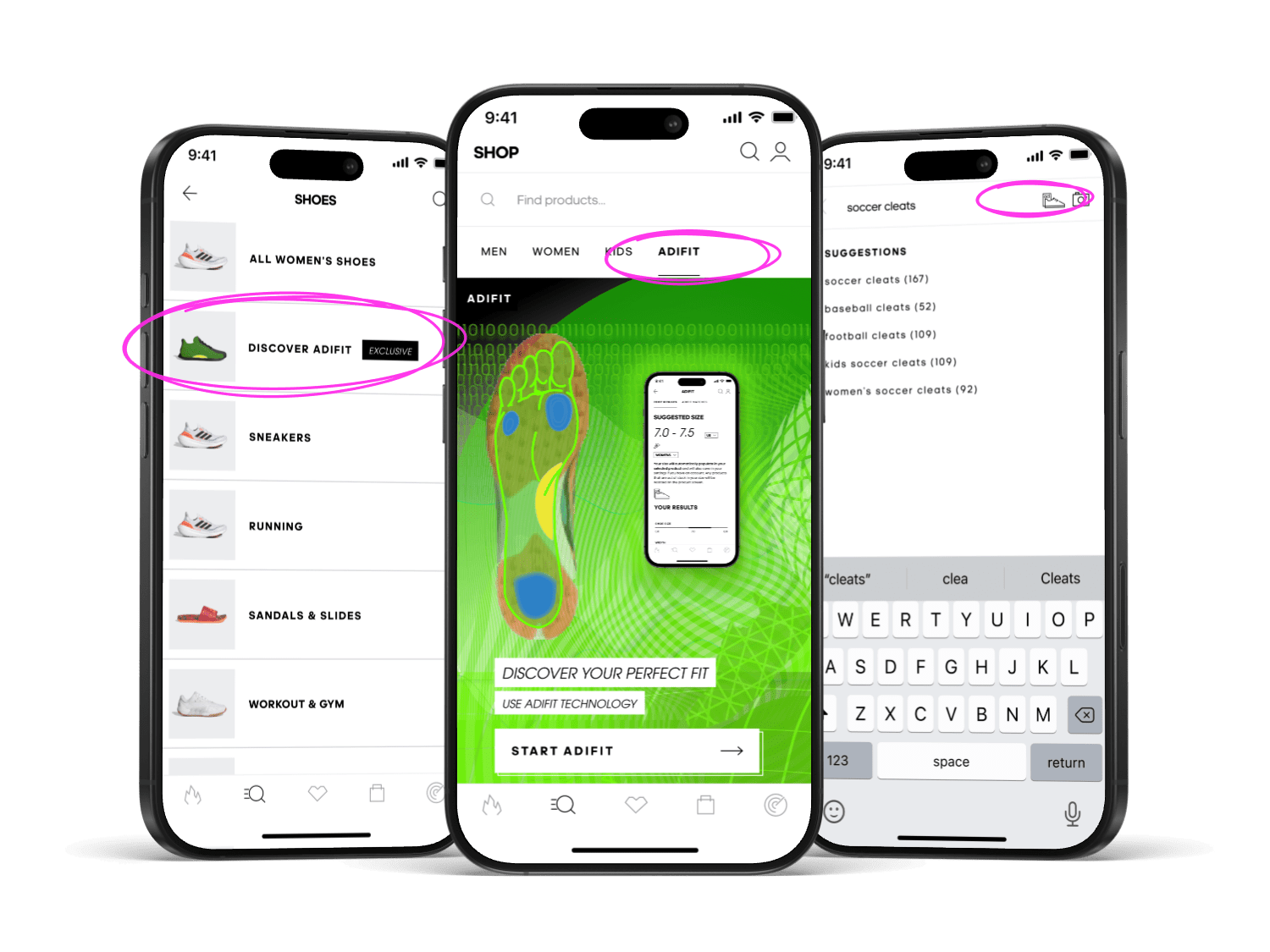
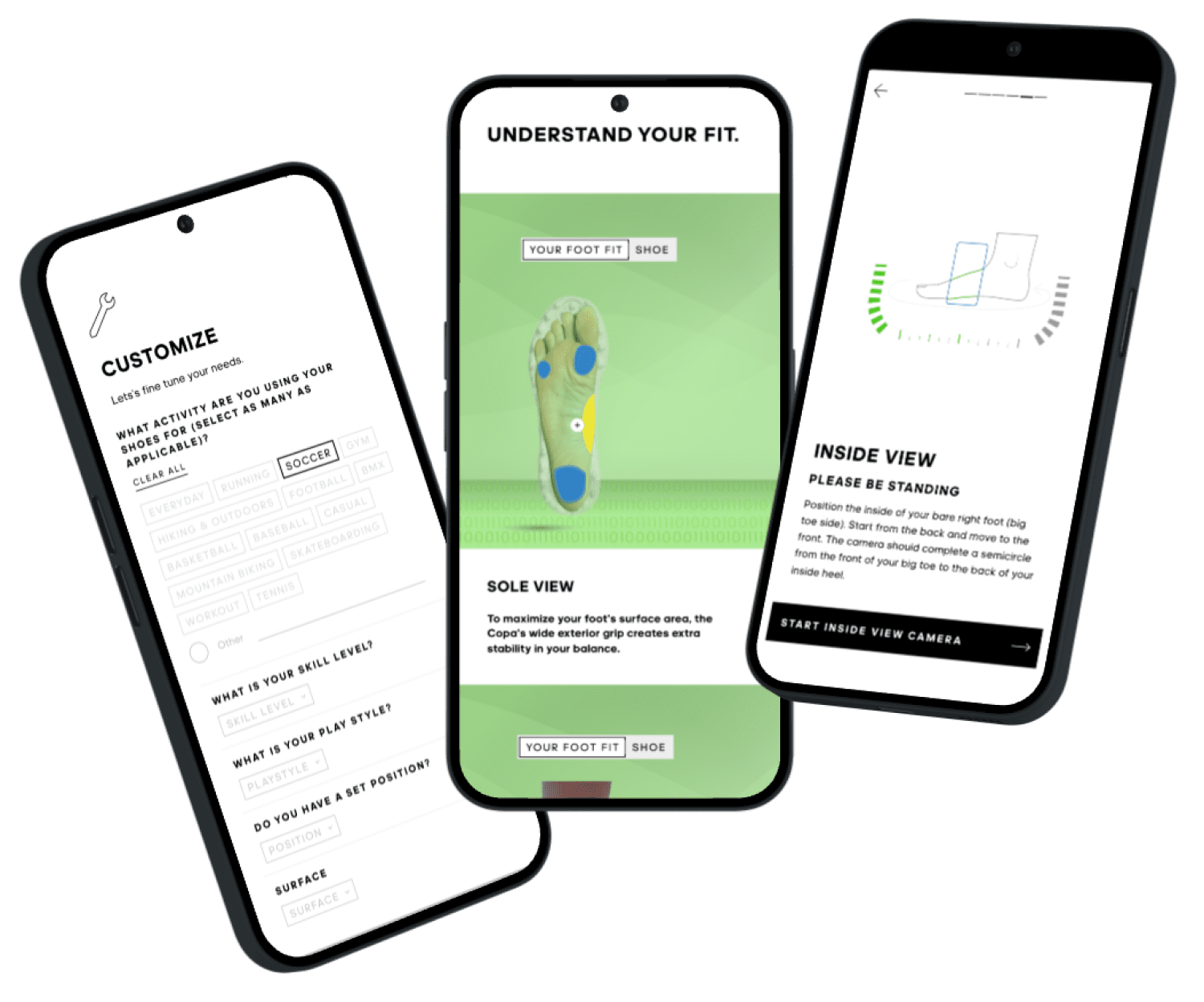
To solve this problem, I designed Adi-fit, a mobile app that helps users find the perfect footwear for their sport, body, and playing environment with confidence.

Solving for the Problem

Solving the Confidence Crisis in Online Retail

Problem # 1

Sizing and fit uncertainty hinders online shoe purchases

Attempted Solutions to Problem #1

Precise Foot Scanning

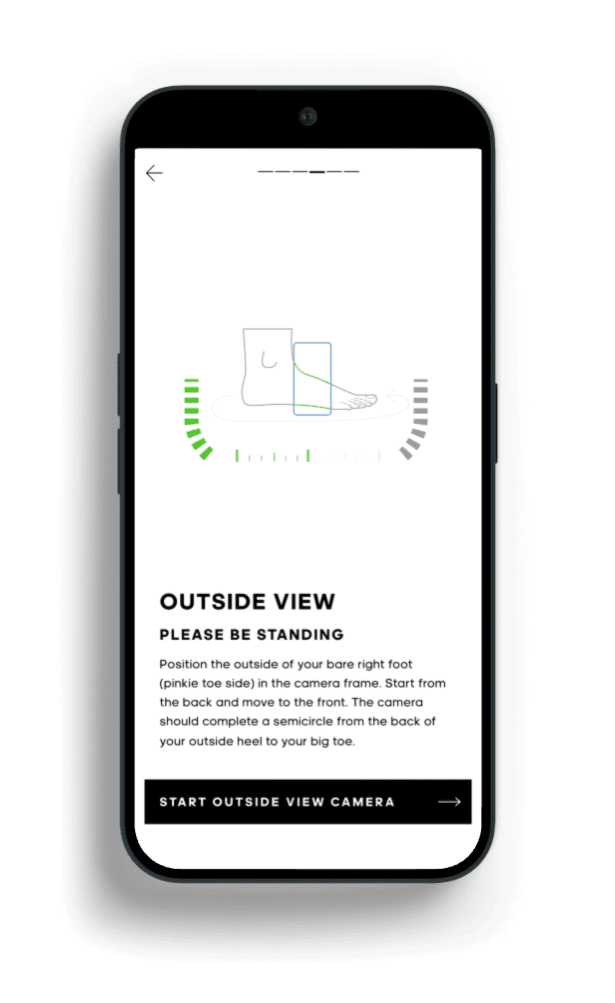
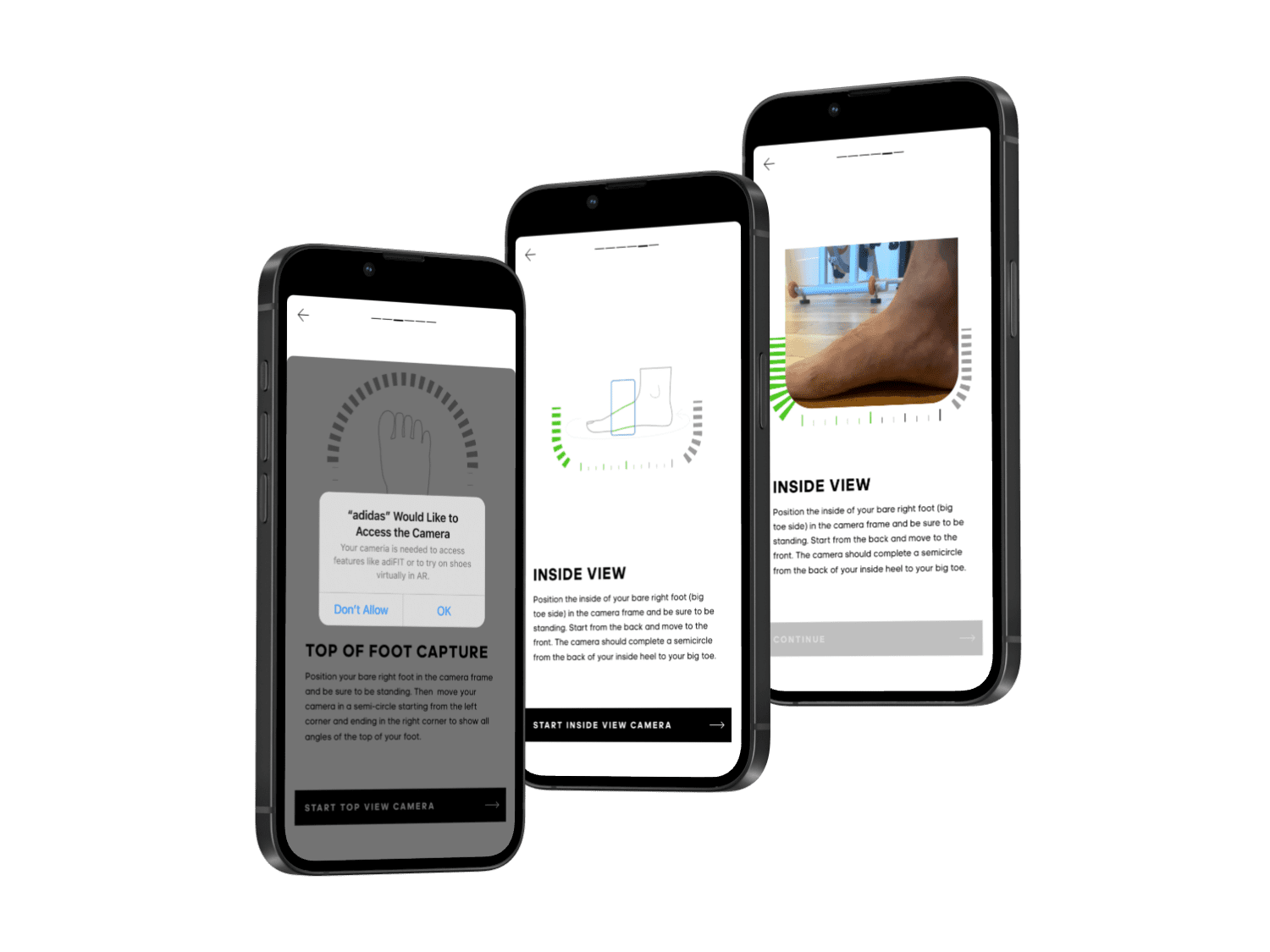
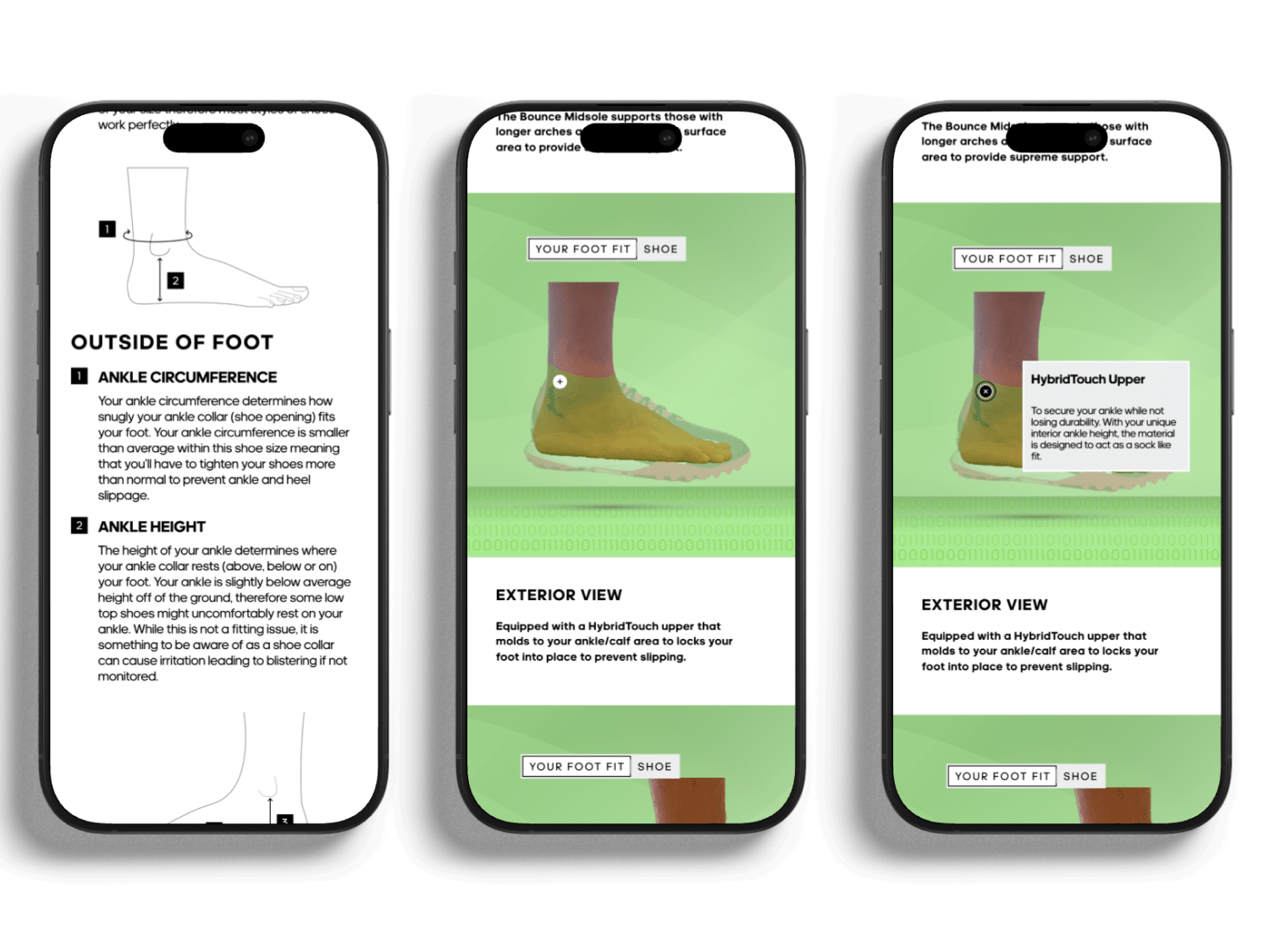
The app uses the camera to create a detailed 3D model of your foot, matching your unique measurements to specific shoe designs to ensure a perfect fit the first time.

Easy to Follow Guidance

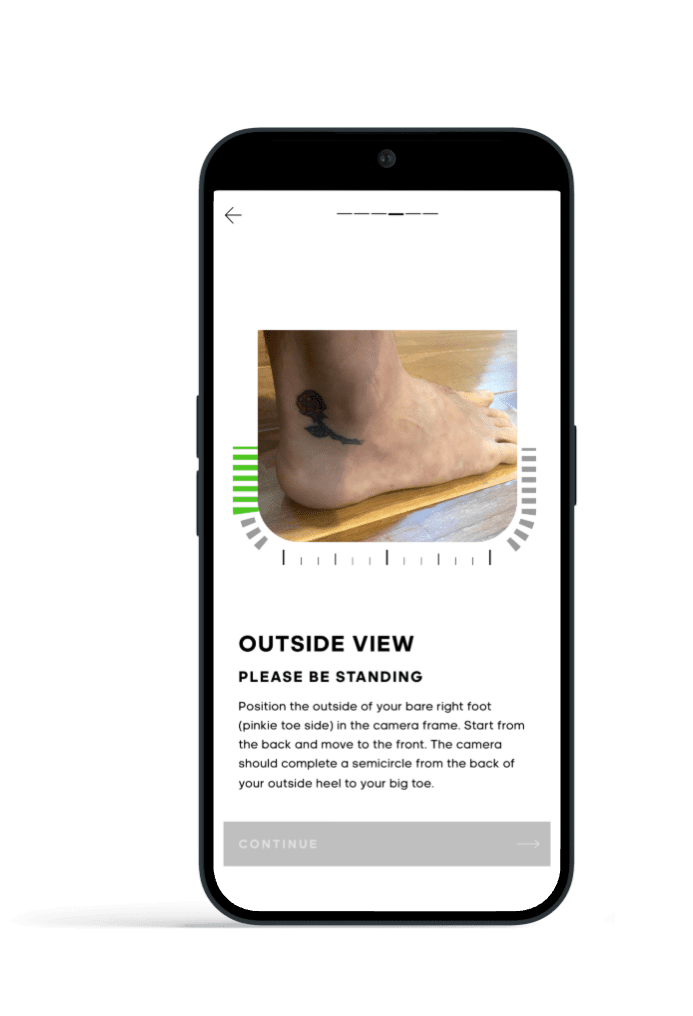
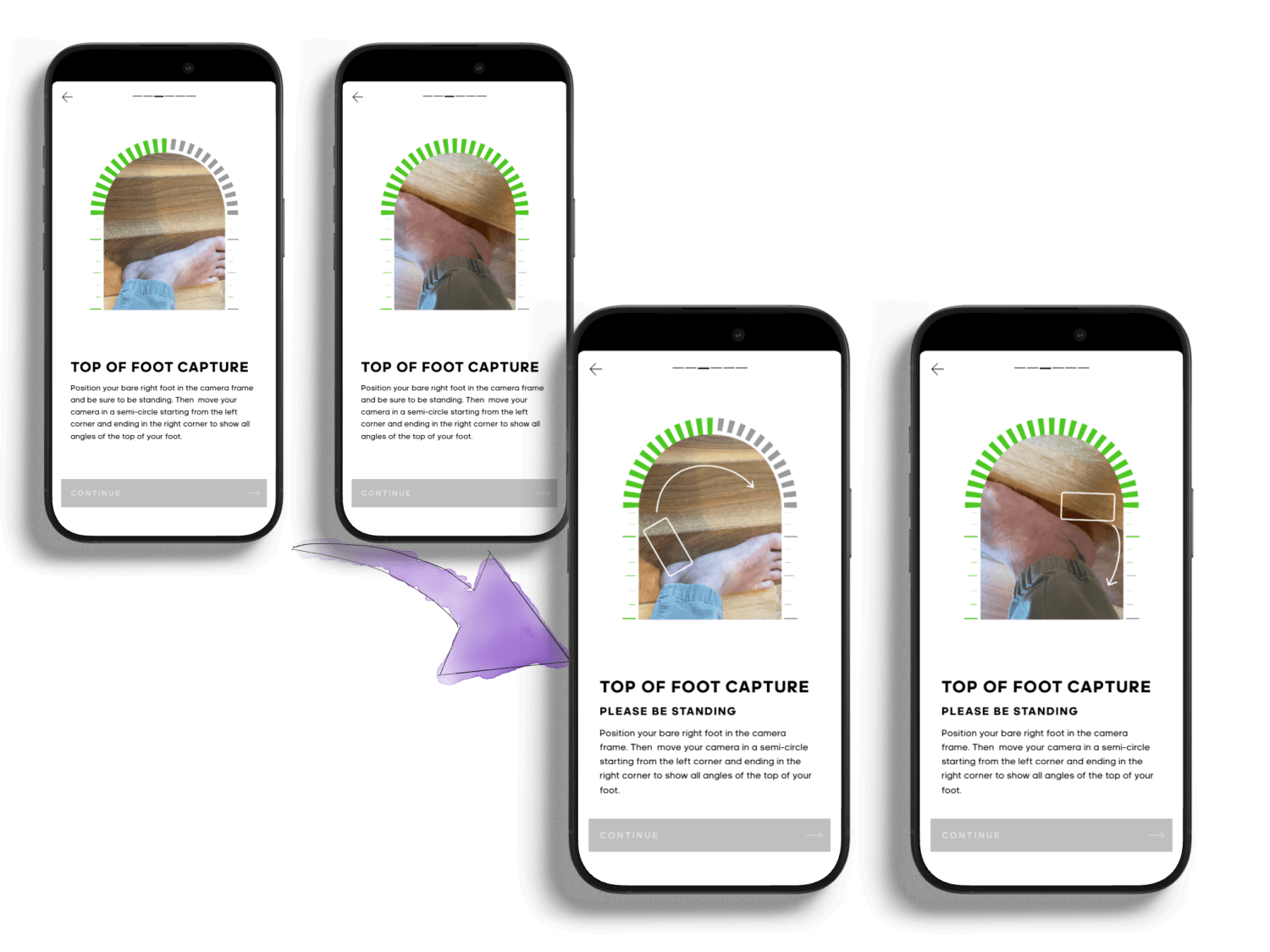
I streamlined the measurement process into a simple, four-step guide. The app uses clear visual cues and real-time feedback to walk you through each step. This intuitive process ensures every measurement is accurate and builds user confidence along the way.

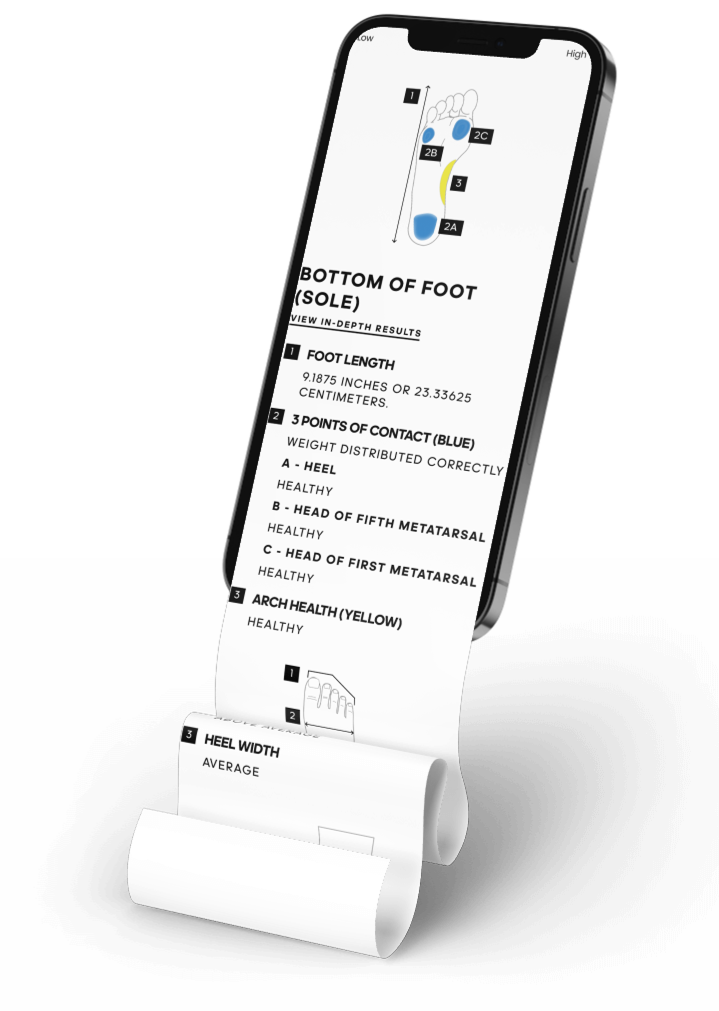
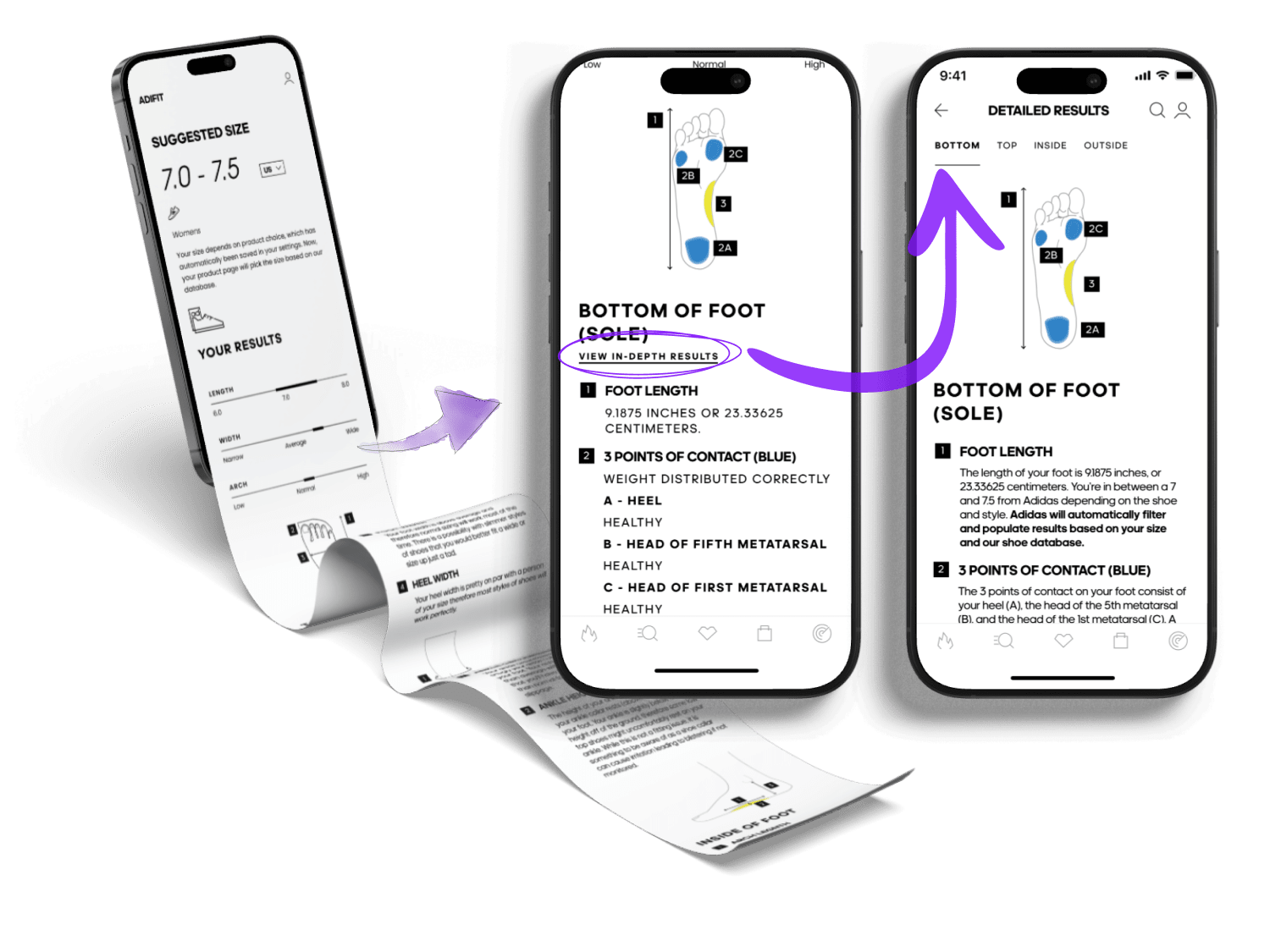
Personalized "AdiFit" Results

The main challenge was to solve the problem of sizing and product selection with an innovative, tech-forward solution. This was accomplished by building trust, easing user adoption, and translating needs.
Solving for the Problem

Solving the Confidence Crisis in Online Retail

Problem # 2

Matching shoes to specific user needs online is difficult

Attempted Solutions to Problem #2

More Than Just Length

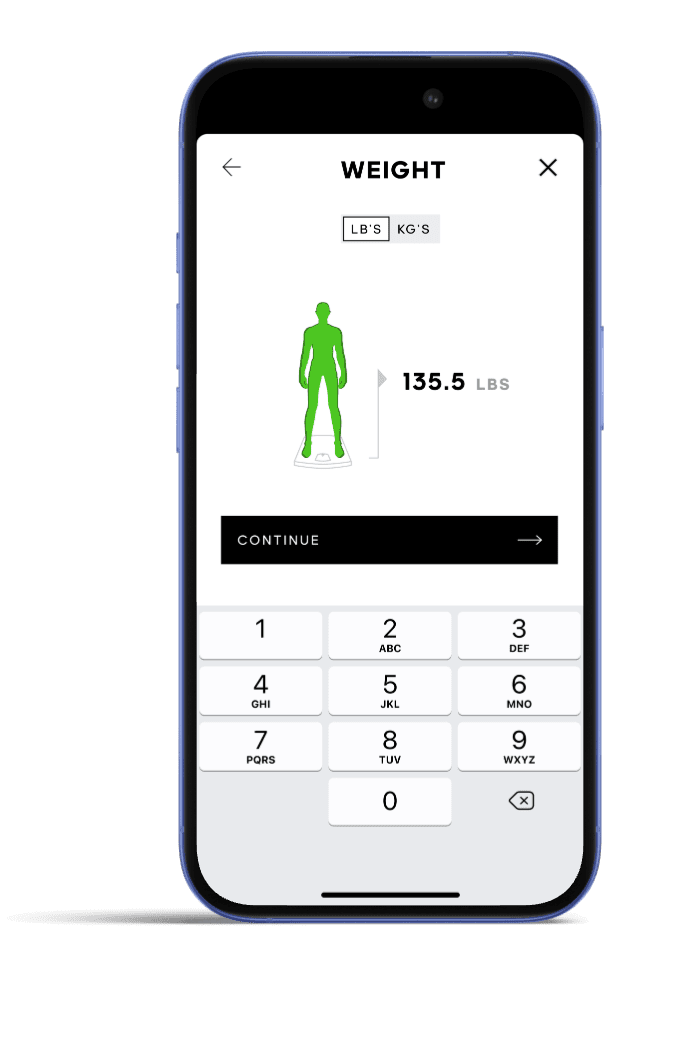
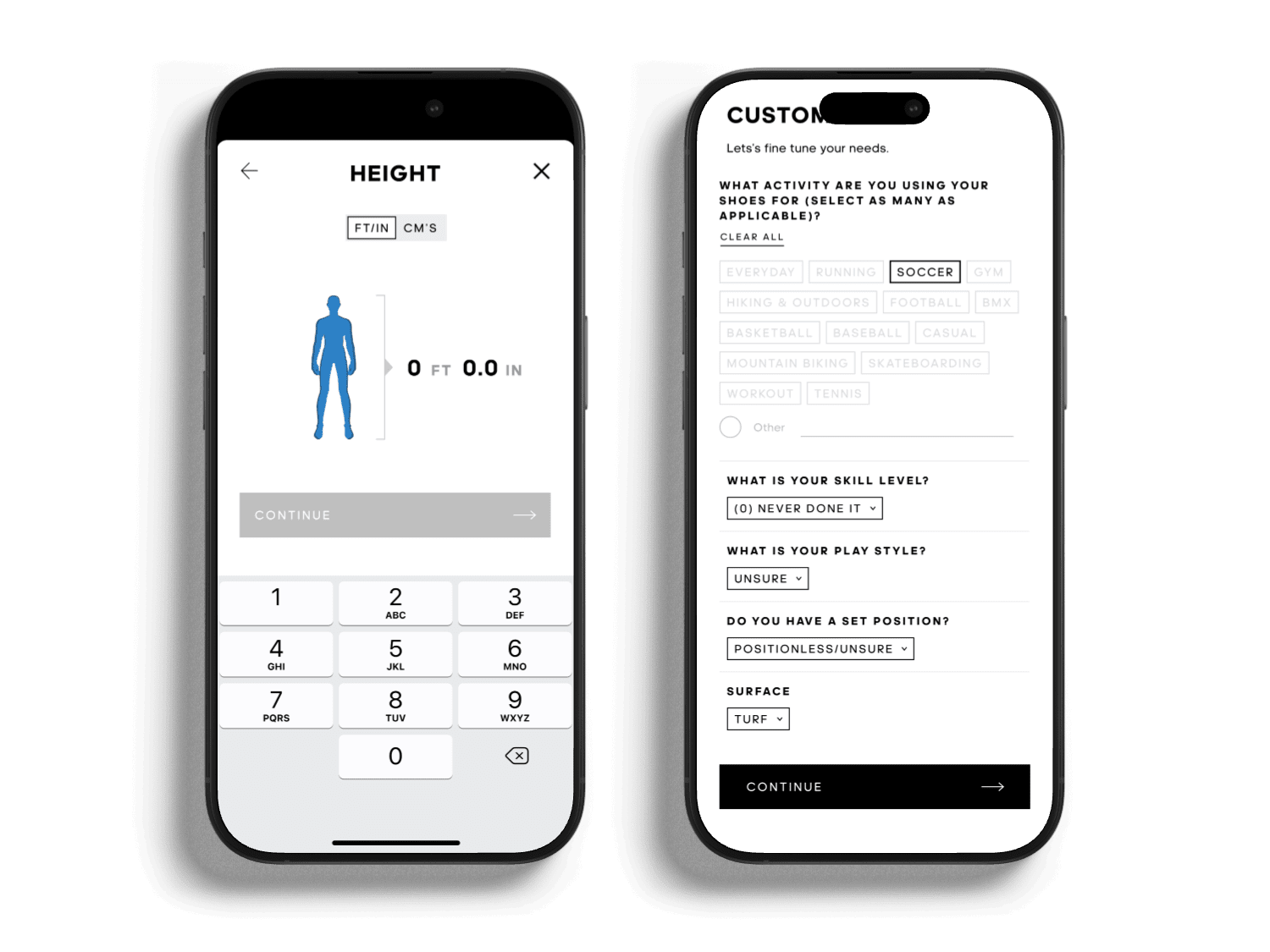
Body proportions play a key role in finding the perfect fit. This feature considers a user's height and weight to recommend a shoe that's specifically designed for their body type. It ensures optimal comfort, support, and an aesthetically pleasing fit.

The Problem: A Mismatch

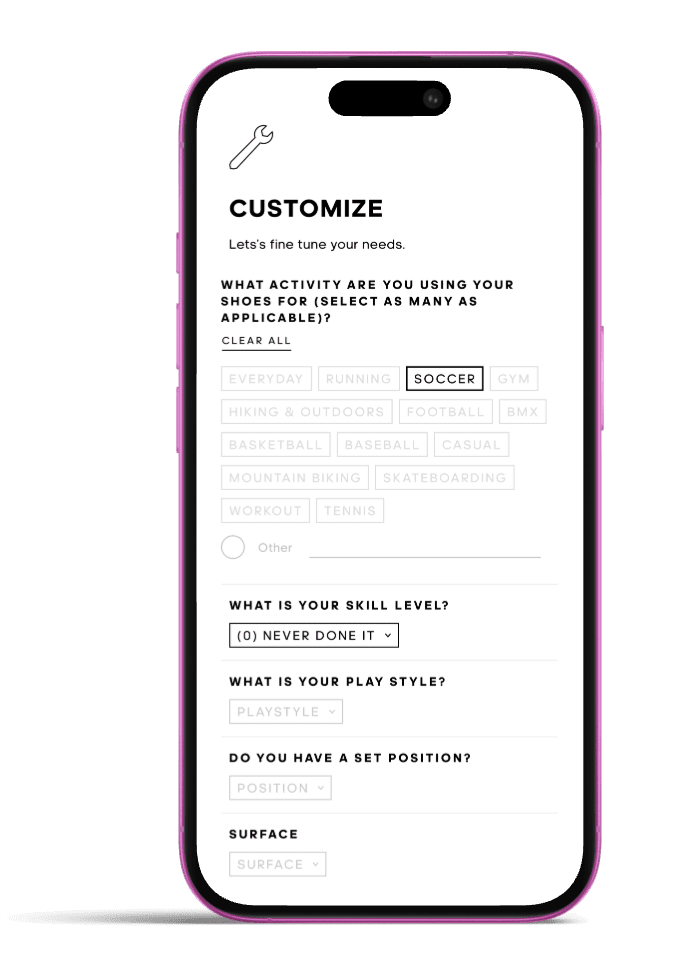
I started by asking, "Why do users feel lost when buying shoes?" My research revealed that the problem wasn't a lack of options, but a lack of guidance. Users need help matching their unique needs—like position, skill level, and playing style—to the right shoe. This realization became the core of my design.

Your Perfect Match

Once the scan is complete, the app presents a curated list of personalized recommendations. Instead of overwhelming the user with hundreds of options, each suggestion includes a detailed breakdown of its fit, benefits, and how it directly meets the user's unique needs, giving them the confidence to make the right choice.
Discover

Putting Our Design to the Test

Usability Tests
To validate the core design of Adifit, I conducted a usability test with four main goals: First, to see if users could easily discover and understand the purpose of key features. Second, to identify any pain points or roadblocks within the user flows, ensuring ease of use. I also wanted to gauge user feedback on the custom UI, language, and icons to determine if they resonated with the target audience. Finally, the test aimed to uncover any missing or ineffective features within the prototype, providing a clear roadmap for future iterations.
5 Users
Chelsea
Daryl
Janaii
Rainer
Austin
User Tasks

Finding the Sweet Spot

Users were given one task: find an indoor soccer cleat.

The Goal

To pinpoint the best place within the app to introduce our sizing tool.

Lacing Up the Right Data

To deliver a personalized product recommendation, users completed a short onboarding flow during the initial in-app feature setup. This task involved answering a series of questions about their physical attributes and athletic preferences, such as height, weight, intended user, play style, and skill level.

The Goal

It allowed AdiFit to provide users with a curated selection of indoor soccer cleats that were not only in their size, but also optimized for their unique foot shape and performance needs.

Measuring Up to Expectations

To understand the user experience of a novel foot-measuring tool, we assigned users the task of measuring their own feet using our in-app camera flow.

The Goal

This task allowed me to identify critical pain points, assess the ease of use, and validate the overall feasibility of self-service foot measurement.

The Final Goal: Adding to Bag

Users were asked to select the best-fitting cleat and add it to their bag to test the effectiveness of our product recommendations.

The Goal

To identify usability issues and validate that the personalized results successfully led to a clear user choice.
Key Takeaways

Found Problem

Usability testing revealed that 80% of users felt overwhelmed by the amount of foot measurement data presented, leading to information overload and a frustrating experience.

Attempted Solution

I redesigned the data display using Hick's Law principles. The updated design now presents only essential, high-level information by default. Users can choose to view more detailed data in a secondary, on-demand view, significantly reducing cognitive load.

Found Problem

80% of participants expressed confusion with the in-app camera, struggling to understand how to correctly position their foot for sizing.

Attempted Solutions

Improving Visual Prompts: We integrated clearer, more intuitive on-screen visuals that now explicitly demonstrate the correct body position for sizing.
Adding Concise Instructions: We replaced confusing text with simple, short phrases to guide users step-by-step.
Final Prototype

AdiFit: Personalized Sizing

Based on the research, I developed a high-fidelity prototype to showcase my proposed solution. This interactive prototype presents the full user flow, from foot measurement to product purchase, and incorporates our key design decisions to create a seamless and personalized experience.

Reflection

Reflecting on the Case Study

This case study demonstrates that leveraging technology to create a personalized, in-person feel for online shopping can significantly enhance the user experience. By tailoring product recommendations, we can help users feel more confident in their purchasing decisions, ultimately improving conversion and customer satisfaction. The insights gained from this project highlight the value of personalization in e-commerce, a crucial element for creating memorable and effective digital products.

Looking Beyond the Present: Future Opportunities
The lessons learned from this project serve as a foundation for future innovations. As technology evolves, so too will the opportunities for creating seamless, hyper-personalized experiences. Emerging technologies such as LiDAR and AI/VR have the potential to revolutionize how users interact with online products, offering even more precise and immersive experiences.
Next Steps & Future Decisions
Moving forward, our focus will be on refining the user experience and exploring new avenues for growth. Our next steps include:

Further Refinement:

Expanding the scope to include a wider range of footwear options (e.g., football cleats, skateboard shoes, basketball shoes) and refining the filtering system with more specific questions to enhance product discovery.

Research & Research:

Utilizing A/B testing and card sorting to determine the most effective filtering and categorization methods. This will help us better understand user mental models and ensure the app's information architecture aligns with user expectations.
More Case Studies
UX/UI Design

SKS Law

A responsive and strategic web redesign for the Austin-based law firm maximizes user benefits while balancing business needs.

View Case Study
UX/UI Design

GigHQ.ai

Lead Designer for GigHQ.ai, responsible for the full product lifecycle, brand, and UX. This case study details the creation of a Design System and a research-driven feature that significantly mitigated development risk for V1 launch.

View Case Study